
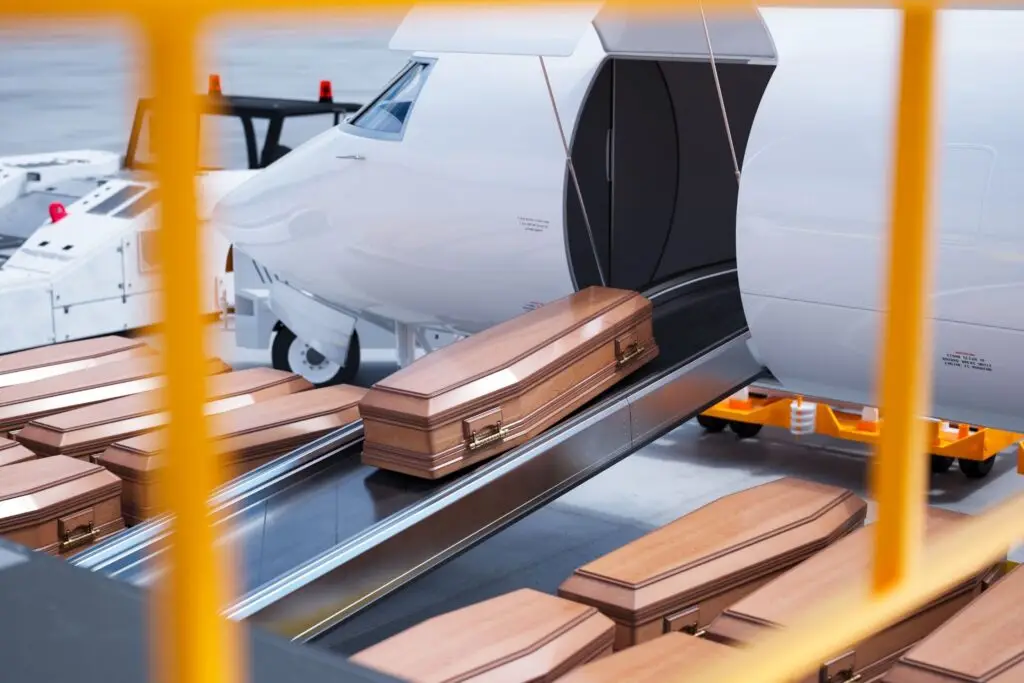
A death away from home adds distance to an already painful moment.
It might happen in Florida during the winter. It might happen on a cruise. It might happen while visiting family in another state. It might happen overseas during a trip that was supposed to be restful, joyful, or ordinary.
For many Montgomery County families, this is not rare. Parents retire part of the year to Florida. Grandparents travel. Couples take cruises. Adult children live in different states. Families spread out, but still want a loved one brought back to Hatboro, Horsham, Willow Grove, Warminster, Southampton, Abington, or another nearby community for services, burial, cremation, or final placement.
The first question is usually simple.
What do we do now?
The answer depends on where the death happened, who confirmed it, whether local authorities are involved, whether the death occurred in the United States or another country, and what the family wants next. Still, one piece of guidance applies in many situations.
Call the funeral home where the services will take place.
If your loved one should return to Montgomery County, the local receiving funeral home helps coordinate the process from this end. That call gives your family one steady place to start.
Why Calling the Local Funeral Home First Helps
When a death happens away from home, families often think they need to call a funeral home in the city where the death occurred.
Sometimes local help is needed right away. A hospital, care facility, cruise line, medical examiner, coroner, or local authority may already have a process in motion. But if the family wants services back home, calling the home funeral home first often prevents confusion.
The funeral home in Montgomery County serves as the receiving funeral home. That means it helps coordinate with the funeral home, transfer service, hospital, medical examiner, airline, or other agency in the place where the death occurred.
Remembering A Life explains this point clearly in its guidance on what to do when death happens in different locations. The location of death affects the next steps, and a funeral director helps guide the family through the right process.
Starting with the receiving funeral home also helps the family avoid making separate calls to unfamiliar providers without knowing what is needed, what is reasonable, or what costs to expect.
What a Receiving Funeral Home Does
The receiving funeral home is the funeral home where the loved one will be brought for care, planning, services, cremation, burial coordination, or final arrangements.
If the family lives in Montgomery County and wants the service here, the receiving funeral home helps manage the return.
This work may include:
- Contacting the funeral home or transfer provider near the place of death
- Coordinating release from a hospital, care facility, coroner, or medical examiner
- Reviewing legal paperwork and permits
- Helping arrange ground or air transportation
- Receiving your loved one once they arrive
- Scheduling the arrangement meeting with the family
- Planning visitation, funeral, cremation, burial, or memorial services
- Coordinating with the cemetery, church, clergy, crematory, or other providers
Families should not need to figure out every contact by themselves. A funeral home does this work regularly. That experience matters when the death happened hundreds or thousands of miles away.
If a Parent Dies in Florida
This is one of the most common situations for families in Pennsylvania.
A parent spends winter in Florida. They live there part time, stay with relatives, own a condo, or belong to a retirement community. Then a death occurs, and the family wants them returned to Montgomery County.
The first step depends on where the death occurred.
If the death happened in a hospital or care facility, staff will guide the first medical and paperwork steps. If the death happened at home and hospice was involved, the hospice nurse should be called. If the death was unexpected, local emergency services or authorities should be contacted.
Once the death has been confirmed and local requirements are underway, the family should contact the Montgomery County funeral home where services will occur.
The receiving funeral home then coordinates with a Florida funeral home or transfer service. The Florida provider may care for the person locally, secure required permits, prepare for transport, and arrange delivery by ground or air, depending on distance and family wishes.
Once your loved one arrives back in Montgomery County, the receiving funeral home continues with the family’s arrangements.
If a Death Happens on a Cruise
A death on a cruise adds another layer because the ship, port authorities, and the country or state of docking may all be involved.
The ship’s medical team or crew will begin the first steps. The cruise line will have procedures for caring for the person who died, notifying proper authorities, and coordinating with the next port. If the ship is outside the United States, foreign authorities and the nearest U.S. embassy or consulate may become part of the process.
Families should ask the cruise line who is handling the immediate arrangements and what port will manage the next steps. Then contact the receiving funeral home back home.
The receiving funeral home helps coordinate with the cruise line, port authority, local funeral provider, embassy or consulate when needed, and transportation providers.
This process may take longer than a death in a hospital or care facility. The ship’s location, port schedule, local laws, paperwork, and transport options all affect timing.
The family should ask for clear updates and avoid signing unnecessary agreements before speaking with the receiving funeral home.
If Someone Dies Overseas
An overseas death brings more paperwork.
If the person was a U.S. citizen, the nearest U.S. embassy or consulate helps with death-related documents and communication with local authorities. The country where the death happened controls the first legal steps. Local law, local funeral providers, consular paperwork, airline rules, and U.S. import requirements all matter.
The family should contact the U.S. embassy or consulate in the country where the death occurred. The receiving funeral home in Montgomery County should also be contacted as early as possible.
For a return to the United States, documents may include a foreign death certificate, consular paperwork, mortuary certificate, transit permit, embalming or cremation documentation, and other paperwork required by the country of death, the airline, and U.S. authorities.
The family should also check for travel insurance. Some policies include repatriation coverage, which may help pay the cost of returning remains or cremated remains home.
International return often takes longer than domestic transfer. Translation, consular documents, local holidays, airline schedules, embalming rules, cremation rules, and public health requirements all affect timing.
Who to Call First
Use the location of death as the guide.
If death occurs in a hospital or care facility, speak with the staff first. They will contact the attending physician and begin required paperwork.
If death occurs at home under hospice care, call hospice first. Hospice staff will guide the family and confirm the death.
If death is sudden, unexpected, unattended, or due to an accident, call local emergency services or authorities.
If death occurs during travel, contact the local authority, hospital, cruise line staff, hotel management, tour operator, or embassy as appropriate.
Then contact the receiving funeral home back home.
Do not worry about having every answer before calling. Funeral directors expect families to call while details are still unclear.
What the Family Should Say on the First Call
The first call does not need to be perfect.
The funeral home will guide the conversation. Still, having a few details helps.
Try to provide:
- Your loved one’s full legal name
- Date and location of death
- Where your loved one is now
- Name of the hospital, facility, cruise line, coroner, medical examiner, or local funeral home involved
- Your relationship to the person who died
- Whether burial or cremation is preferred
- Whether services should take place in Montgomery County
- Whether a cemetery plot, prearrangement, or funeral policy exists
- Whether the person was a veteran
- Any travel insurance or repatriation coverage information
If you do not know an answer, say so. The funeral home helps gather what is missing.
What Transfer Actually Means
Transfer means moving a person who has died from one location into the care of a funeral provider, then possibly from that provider to another funeral home, cemetery, crematory, airport, or final destination.
Remembering A Life explains the process through guidance on the transfer of a loved one, including the role of funeral directors and the respectful care used during transfer.
In a death away from home, there may be more than one transfer.
For example, a local Florida provider may transfer the person from a hospital to the funeral home in Florida. That provider then prepares the person for shipment. The remains are taken to an airport. A receiving funeral home in Pennsylvania then receives the person at the airport and brings them into its care.
For a closer out-of-state death, ground transportation may be used instead of air transportation.
Each step requires coordination.
What It Costs in Broad Terms
The cost depends on distance, location, paperwork, preparation, and transportation method.
A death in another Pennsylvania county or a nearby state usually costs less than a death across the country. A death in Florida often costs more because air transportation or a long-distance ground transfer may be involved. A death overseas usually costs more because of local provider charges, consular documents, airline requirements, translation, embalming or cremation rules, and international shipping.
Typical cost categories may include:
- Local funeral home or transfer provider near the place of death
- Removal from hospital, residence, cruise port, or facility
- Embalming or preparation required for transport
- Shipping container or air tray
- Permits and death certificate documents
- Airline cargo charges or ground transportation
- Receiving funeral home transfer from airport or delivery point
- Receiving funeral home professional services
- Funeral, cremation, burial, cemetery, clergy, obituary, or service costs back home
Ask for an estimate that separates the sending costs, transportation costs, and receiving funeral home costs.
That separation helps families understand where the money goes.
How Long It Takes
There is no single timeline.
A nearby out-of-state transfer might take one to three days after paperwork clears. A Florida transfer might take several days, depending on death certificate timing, permit approval, preparation, flights, and funeral home coordination. An overseas return may take a week or longer, and sometimes more, depending on the country, consulate, documents, airline schedules, and cause of death.
Medical examiner or coroner involvement may add time. An autopsy may add time. Weekends, holidays, storms, cruise port schedules, and airline cargo availability may also affect timing.
Families should avoid setting a public service date before the receiving funeral home confirms the return timeline.
It is better to wait for firm information than to reschedule family, clergy, cemetery, and guests later.
Burial, Cremation, or Services Back Home
A death away from home does not prevent the family from having services in Montgomery County.
The person may be brought home for burial. They may be brought home for cremation. They may be cremated in the place of death and have cremated remains brought or shipped home. The family may hold a viewing, Mass, funeral service, memorial service, graveside committal, or private gathering.
The right choice depends on timing, cost, faith, family travel, cemetery plans, and the wishes of the person who died.
If cremation takes place before return, families should understand how cremated remains will be transported and what documents accompany them. If a viewing is desired, discuss that before any cremation decision is made.
Do not assume a death away from home removes your options. It changes the logistics.
Why Pre-Planning Helps Snowbird Families
Snowbird families benefit from written plans.
If a parent spends part of the year in Florida and part of the year in Montgomery County, the family should know where services should happen, which funeral home to call, whether burial or cremation is preferred, whether a cemetery plot exists, and where insurance or prearrangement documents are kept.
The plan should also include travel insurance information, veteran paperwork, cemetery deed, contact list, and emergency contacts.
The most useful step is telling one trusted person where the folder is.
A folder nobody finds does not help.
What Happens at the Arrangement Meeting
Once the receiving funeral home has the basic transfer information, the family will schedule an arrangement meeting.
That meeting covers both practical and service details. The funeral home reviews personal information for records, death certificate needs, transportation, burial or cremation choices, service timing, obituary information, clergy, cemetery, photos, clothing, military service, and payment details.
Families who want a simple overview may review what to expect when meeting with the funeral home before the appointment.
When a death happens away from home, the meeting also includes transfer updates, costs from the sending funeral home, transport timing, paperwork, and when services may be scheduled.
When Children and Teens Are Waiting at Home
A death away from home can confuse younger family members.
A child may ask why the person is not back yet. A teen may want exact details. Younger children may hear adults talking about “transport” and not understand what it means.
Use clear, gentle language.
“Grandmom died in Florida. The funeral home is helping bring her back here so we can have the service.”
Or:
“Dad died while he was away. There are papers and travel steps before he comes home. We will tell you what we know as we learn it.”
Children do not need every logistical detail. They need honesty, reassurance, and adults who stay steady.
For families supporting children after a death, guidance for helping children and teens through grief offers a gentle place to begin.
What If There Is Travel Insurance?
Look for travel insurance, credit card travel coverage, cruise protection, employer travel coverage, union benefits, or a life insurance rider.
Some policies include repatriation of remains. Others do not. Some require families to call a specific assistance company before making arrangements. Some reimburse later. Some coordinate directly with providers.
Find the policy before signing local agreements if possible.
Call the insurance assistance number and ask what is covered, what providers must be used, what documents are required, and whether the policy pays directly or reimburses the estate or family.
Then share that information with the receiving funeral home.
What If There Is No Money Set Aside?
A death away from home may cost more than the family expected.
If there is no prearrangement or travel insurance, ask for clear written estimates before decisions are made. Ask whether cremation in the place of death is less costly than returning the body. Ask whether ground transport or air transport makes more sense. Ask what must happen there and what can wait until your loved one is back home.
Cost questions are not disrespectful.
They are responsible.
A family deserves to understand the full picture before choosing.
What If the Death Is Under Investigation?
If the death was sudden, unattended, accidental, violent, or unclear, a coroner or medical examiner may become involved.
This may delay release. It may require an autopsy. It may affect the timing of the death certificate, permit, and transportation.
The family should ask who has legal custody of the body, when release may occur, and what paperwork is needed. The receiving funeral home can help communicate with the local provider once authorization is in place.
Do not schedule services until release is confirmed.
What If the Family Wants Burial in Montgomery County
If burial will happen back home, gather cemetery information early.
Find the cemetery deed, lot number, grave number, mausoleum information, niche documents, or family plot records. If the person was a veteran, locate the DD-214. If the burial is in a church cemetery, contact the church or cemetery office.
The receiving funeral home will help coordinate with the cemetery once the person is returned and the service date is known.
Families should ask about opening and closing charges, marker rules, burial permit needs, military honors, and whether a prior plot is available for use.
What If the Family Wants Cremation
Cremation after a death away from home involves a choice.
The family might choose cremation where the death occurred, then bring cremated remains back to Montgomery County. Or the family might bring the person back first, then hold visitation, funeral, cremation, or burial of cremated remains here.
If an open casket, private family viewing, or religious service before cremation matters, say so before authorizing cremation out of state or overseas.
Once cremation occurs, that step is final.
Ask the funeral home to explain the options before signing cremation authorization.
Keeping One Person as the Contact
Travel-related deaths involve many calls.
Hospital. Local authorities. Funeral home. Airline. Embassy. Cruise line. Insurance company. Cemetery. Clergy. Relatives.
Choose one family contact when possible.
This person does not need to make every decision alone. They serve as the communication point so information stays organized. They should keep notes, names, phone numbers, dates, costs, and next steps in one place.
This reduces confusion and prevents family members from receiving different pieces of information from different providers.
The Human Side of Coming Home
The logistics are real.
So is the emotion.
A death away from home may leave the family feeling unsettled. The person was not where everyone expected them to be. The goodbye feels interrupted. The distance makes the loss feel harder to grasp.
Bringing a loved one back to Montgomery County helps some families feel grounded. It brings the person home to familiar roads, familiar churches, familiar cemeteries, and familiar people.
That does not erase the pain. It gives the family a place to gather.
For many families, that matters deeply.
Do Not Try to Handle It Alone
A death away from home requires coordination, paperwork, timing, and care.
Families should not feel they have to manage it by themselves from a hotel room, airport, cruise terminal, or another state.
Call the local funeral home where services will take place. Share what you know. Let the funeral director help identify who needs to be contacted and what happens next.
Ask for written estimates. Ask about timing. Ask what paperwork is needed. Ask what choices are still available. Ask what should wait until your loved one is back home.
Those questions are normal.
Bringing Someone Back With Care
When someone dies away from home, the family faces two kinds of distance.
There is the physical distance between where the death happened and where the family needs to gather.
There is also the emotional distance created by uncertainty.
Good coordination helps with both.
The process may involve local authorities, a sending funeral home, a receiving funeral home, airlines, consulates, permits, insurance, cemetery staff, clergy, and family members. It may take days. It may cost more than a local death. It may require patience.
Still, the goal is simple.
Bring your loved one into care. Bring them back to the community where the family needs to say goodbye. Help the family make decisions with clear information and steady support.
That is the work.
The team at Plunkett McFillin Funeral Home is here for your whole family and includes its youngest members. Call us at (215) 672-6262.