
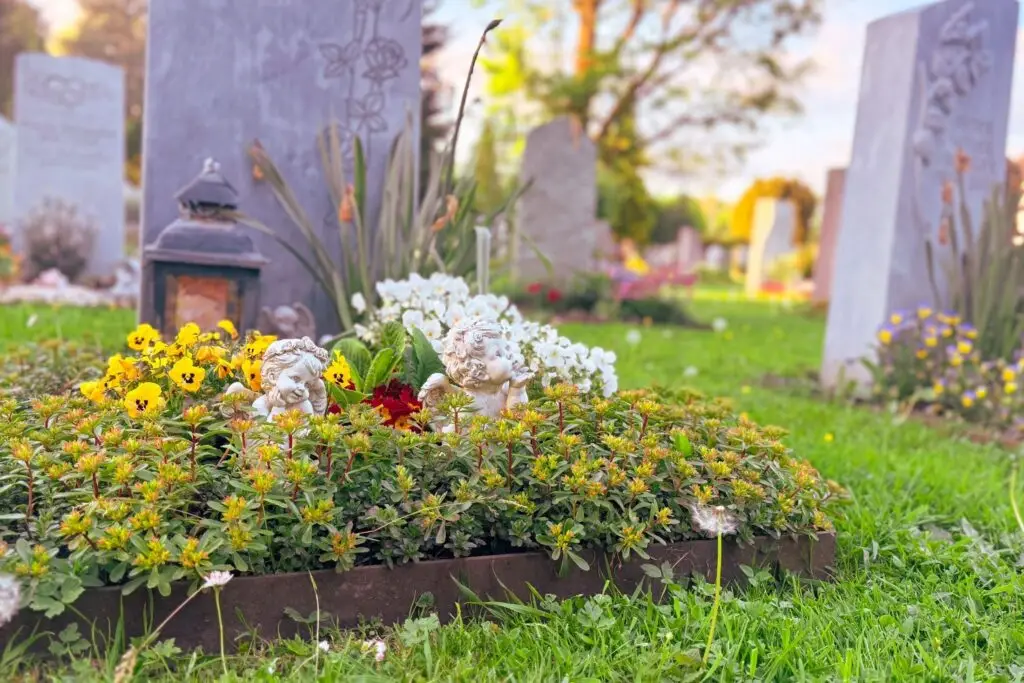
August changes what a graveside arrangement needs to survive.
In December, families think about wreaths, blankets, evergreen pieces, ribbons, and holiday decorations. Summer asks a different set of questions. What flowers last in heat? What wilts before the week ends? What belongs in a vase? What gets moved by cemetery staff? What happens when mowing crews come through?
These questions matter because visiting a cemetery is personal. A flower arrangement is not only decoration. It is a way to say, “I was here.” It is a way to mark a birthday, anniversary, holiday, or ordinary afternoon when someone needed to feel close to the person they miss.
Still, cemetery grounds are shared spaces. They need care, safety, maintenance, and clear rules. Every cemetery has its own policies, and those rules matter more than what seems common at another cemetery nearby.
A permanent vase is different from flowers left on the grass. A fresh arrangement is different from an artificial one. A small approved item is different from glass, ceramic, fencing, mulch, stones, toys, or objects that block mowing equipment.
The kindest step is to check before leaving anything behind.
Why Summer Cemetery Visits Feel Different
Summer visits often feel more open and relaxed than winter visits. Families stop after work. Grandchildren come along. People bring flowers from a garden, a florist, or a roadside stand. The grounds look green. The light lasts longer. A visit may feel less formal, but no less meaningful.
The problem is heat.
August sun is hard on flowers. Cut stems dry out faster. Water warms. Petals brown. Leaves curl. Bright arrangements fade. Some flowers look full in the car and tired by the next afternoon.
Cemeteries also move through a heavier maintenance season. Grass grows quickly. Mowing schedules stay active. Storms drop branches. Staff need open paths for equipment and visitors. Anything placed on the ground may create a problem, even when placed with love.
That is why summer cemetery decorating needs more planning than many people expect.
What Usually Holds Up in August
No flower lasts forever in heat, but some hold up better than others.
Hardier choices often include chrysanthemums, carnations, sunflowers, zinnias, statice, alstroemeria, and certain greenery. Florists often recommend sturdy stems because they tolerate sun and heat better than delicate blooms.
Roses, hydrangeas, tulips, lilies, and soft garden flowers may look beautiful at first, then fade quickly under direct sun. Hydrangeas in particular often need a lot of water. In hot weather, they droop fast without steady moisture.
Artificial flowers are another option, but they also need care. Summer sun fades fabric and plastic. Rain bends stems. Wind can loosen pieces. By late August, an artificial arrangement that looked fresh in June may look tired, dusty, or damaged.
If the cemetery allows artificial flowers, choose a natural look, secure the arrangement properly, and return later to remove or replace it when it fades.
What Does Not Hold Up Well
Some items struggle at a graveside in summer.
Loose flowers placed directly on grass often dry quickly or blow away. Small objects may shift during storms or mowing. Glass jars, ceramic vases, candles, picture frames, toys, balloons, ribbons, and lightweight decorations may break, scatter, fade, or interfere with groundskeeping.
Food should never be left at a graveside. It attracts animals and creates maintenance issues. Solar lights, shepherd hooks, fencing, stones, mulch, and planted flowers also require cemetery approval. Many cemeteries restrict or remove those items because they affect the grounds and nearby plots.
Families do not leave these things with bad intent. They leave them because love needs an outlet.
But a shared cemetery requires rules that protect every family’s space.
Permanent Vase Versus Flowers on the Grass
This is one of the biggest differences families need to understand.
A permanent vase is usually part of an approved memorial setup. It may be built into a marker, attached to a foundation, or placed in a cemetery-approved base. It gives families a proper place to leave flowers without blocking mowing equipment or creating debris on the lawn.
Flowers left on the grass are different.
Even if they look neat, they sit in the path of mowing crews, trimmers, visitors, and maintenance work. They may blow into another grave space. They may tip over, dry out, or become damaged. Staff may remove them sooner than a family expects.
The Catholic Cemeteries of the Archdiocese of Philadelphia explain in their cemetery rules and regulations for memorial flowers and groundskeeping that flowers should be placed in approved vases, glass and ceramic vases are not allowed, and items that interfere with groundskeeping may be removed.
That guidance is helpful even for families using another cemetery because it shows the practical reason behind many cemetery policies. The rule is not about discouraging remembrance. It is about keeping the grounds safe, peaceful, and cared for.
Why Cemeteries Remove Arrangements
Families sometimes feel hurt when an arrangement disappears.
That reaction is understandable. If you placed flowers for your mother’s birthday and returned to find them gone, it might feel personal. Most of the time, it is not.
Cemeteries remove arrangements for several practical reasons. Flowers dry out. Artificial pieces fade. Items fall apart. Weather damages displays. Mowing crews need clear access. Objects break. Some decorations violate cemetery rules. Large cleanups happen on set schedules.
Some cemeteries remove fresh flowers after a certain number of days. Others remove them when they look wilted. Some have seasonal cleanup dates. Some clear everything before mowing. Rules vary, which is why families should ask the cemetery office before placing items.
The better question is not, “Why did they take it?”
The better question is, “What does this cemetery allow, and how long does it stay?”
When Mowing Crews Clear Items
Summer mowing crews have a hard job.
They work around markers, vases, uneven ground, trees, visitors, graveside services, and weather. They need to keep the cemetery respectful and safe while protecting memorials and equipment.
Loose items on the grass slow that work. They may need to be moved before mowing. They may get damaged. They may become unsafe if hit by equipment. That is why some cemeteries ask families to keep all flowers in approved vases and avoid placing items directly on the lawn.
If a family wants to leave flowers for a birthday or anniversary, the best choice is often an approved vase. If there is no vase, call the cemetery office and ask what is allowed.
The answer may vary by section, marker type, religion, cemetery ownership, and grounds policy.
Local Cemeteries Have Local Rules
Families in Hatboro, Horsham, Willow Grove, Warminster, Southampton, Abington, and nearby communities have several cemetery options in the area. HorshamAlive maintains a local funeral homes and cemeteries guide for the Horsham area, which includes nearby cemetery listings within a short distance of the 19044 area.
A local guide helps families find phone numbers and locations, but it does not replace cemetery rules. Before leaving flowers, decorations, flags, statues, photos, or seasonal pieces, call the cemetery directly.
Ask simple questions:
- Are fresh flowers allowed in summer?
- Do flowers need to be placed in a permanent vase?
- Are artificial arrangements allowed?
- Are there cleanup dates?
- How long do fresh arrangements stay?
- Are decorations removed before mowing?
- Are glass, ceramic, flags, solar lights, or personal objects allowed?
- Do mausoleum, niche, and ground burial spaces have different rules?
These questions prevent frustration later.
Fresh Flowers in the Heat
Fresh flowers still have a place in summer.
They bring color and tenderness. They feel personal. They suit birthdays, anniversaries, holidays, and quiet visits. The key is choosing flowers that match the season.
Ask a florist for heat-tolerant stems. Choose sturdy flowers over delicate ones. Keep arrangements simple. Avoid heavy pieces that need constant water. Trim stems properly. Use clean water if the cemetery vase allows it. Visit again when possible to remove flowers before they become dry or unsightly.
Some families place flowers for the day and take them home afterward. Others leave them in an approved vase and understand that staff may remove them when they fade.
Both choices are respectful.
Artificial Flowers in Summer
Artificial flowers last longer than fresh ones, but they are not maintenance-free.
Sunlight fades them. Rain spots them. Wind loosens them. Insects and dirt collect on them. A silk arrangement left too long may look worse than fresh flowers that wilted naturally.
Choose artificial flowers with natural colors if the cemetery requires it. Keep the size modest. Avoid glitter, wire pieces, fragile ornaments, and loose attachments. Secure the stems inside the approved vase. Check them after storms or heavy wind.
If you would not want another family to see it near their loved one’s grave, remove it or replace it.
Mausoleum and Niche Spaces
Indoor mausoleums, outdoor crypts, and cremation niches often have different rules from ground burial spaces.
These spaces may allow only certain floral holders, bud vases, or approved artificial arrangements. Some prohibit fresh flowers indoors because of water, staining, insects, or odor. Others restrict items attached to crypt fronts or niche covers.
Never tape, glue, wire, or hang anything without approval.
Even a small item may damage a surface or violate cemetery policy. Call the cemetery office or ask the family service staff before placing something on a mausoleum, niche, or crypt.
Flags and Veterans Graves
Many families want to honor veterans with flags, especially around Memorial Day, Independence Day, Veterans Day, birthdays, and anniversaries.
Flag rules vary. Some cemeteries allow small flags in designated holders. Others have rules about size, placement, and removal dates. Some veteran sections have special guidelines.
If your loved one served in the military, ask the cemetery how flags should be placed and when they are removed. If a marker, plaque, or flag holder needs attention, ask the cemetery office who handles replacements or repairs.
Respect for service and respect for cemetery rules should work together.
Why Rules Feel Emotional
Cemetery rules often feel more personal than other rules.
If a store tells you an item is not allowed, you may shrug. If a cemetery says you cannot leave something at a loved one’s grave, it may hurt. The item might represent a shared memory, a holiday, a child’s drawing, a hobby, a favorite team, or something only the family understands.
That hurt deserves care.
Still, cemeteries make rules because every grave belongs to a family. One family’s display may affect another family’s visit. A loose item may damage equipment. A fragile object may break. A faded arrangement may change the look of the grounds. A decoration on grass may block needed maintenance.
Rules are not always easy, but they help protect a place meant for everyone.
How to Plan a Summer Visit
A little planning makes a summer cemetery visit easier.
Check the weather. Bring water for yourself, not only the flowers. Visit earlier in the day if heat bothers you. Wear shoes suited for grass. Bring gloves if you plan to clean a marker. Take a small bag to remove old flowers, wrappers, or debris.
Before adding anything new, look at the gravesite. Is there an approved vase? Is the ground recently mowed? Are older items faded? Did the cemetery post cleanup notices? Is there a temporary marker, permanent marker, monument, mausoleum, or niche?
Let the site guide the visit.
A small approved arrangement often serves better than a larger item that breaks the rules.
What to Ask During Arrangement Planning
Cemetery questions often come up during funeral planning.
Families may ask where flowers go after the service, what the cemetery allows, who orders the marker, how a vase works, when the grave is covered, and what they may leave later.
Those questions belong in the arrangement conversation. Plunkett McFillin’s resource on what families review during an arrangement meeting explains how the team helps with service details, transportation, obituary support, and items connected to the planning process.
If cemetery decoration rules matter to your family, bring that up early. Ask whether the cemetery has printed rules. Ask if there are seasonal cleanup dates. Ask how permanent vases, markers, or memorial items are handled.
It is easier to ask before the service than to guess months later.
After the Service Ends
Grief continues after the service, and cemetery visits often become part of that grief.
Some people visit every week. Some visit on birthdays. Some visit only once or twice a year. Some do not visit often because the cemetery feels too painful. There is no single right pattern.
Flowers, flags, and small acts of remembrance help many families. So do stories, meals, prayer, photos, and checking in on each other. Grief asks for care beyond the day of burial or placement.
Families looking for gentle support after a loss may find comfort in support for yourself and loved ones through grief, especially when visits, anniversaries, and seasons bring feelings back to the surface.
What to Do If Something Was Removed
If you return and an arrangement is gone, call the cemetery office before assuming what happened.
Ask whether there was a cleanup. Ask whether mowing crews cleared items. Ask whether flowers were removed because they wilted. Ask whether the item violated a rule. Ask whether personal items are saved for pickup or discarded.
Some cemeteries hold removed items for a short time. Others discard them when they are broken, wilted, unsafe, or unapproved. Policies vary.
A calm call gives you better information than frustration alone.
Then ask what type of arrangement is safest to leave next time.
Simple Choices That Usually Work Better
When in doubt, choose simple.
A sturdy fresh arrangement in an approved vase. A modest artificial bouquet in natural colors. A small flag placed according to cemetery rules. A visit with no decoration at all, only time spent at the grave.
Love does not require a large display.
Often, the most meaningful visit is quiet. Pull a weed if allowed. Wipe the marker if appropriate. Say the name. Tell a story. Bring a child or grandchild and explain who the person was. Take a moment before leaving.
The flowers are part of the visit.
They are not the whole visit.
Before You Leave Flowers This Summer
Before leaving anything at a graveside in August, remember the basics.
Heat changes flowers. Wind moves lightweight items. Rain damages fabric and paper. Mowing crews need space. Cemeteries remove arrangements for safety, upkeep, appearance, and rule compliance. Permanent vases exist for a reason. Objects left on grass are more likely to be moved or removed.
Check the rules. Use the approved vase. Avoid glass and ceramic. Keep arrangements modest. Return to remove faded flowers when possible. Ask the cemetery office before adding anything unusual.
These steps protect your loved one’s resting place and the surrounding spaces belonging to other families.
Care That Lasts Beyond the Season
Summer cemetery visits carry their own tenderness.
The sun is bright. The grass is full. The flowers are fragile. The visit might last ten minutes, but it may stay with you for the rest of the day.
That is how grief often works. Small moments hold more weight than expected.
A graveside arrangement is one way to remember. Following cemetery rules is also a form of care. It respects the grounds, the staff, nearby families, and the resting place of someone you love.
August flowers may fade quickly, but the act behind them lasts longer.
You came. You remembered. You cared.
That matters.
The team at Plunkett McFillin Funeral Home is here for your whole family and includes its youngest members. Call us at (215) 672-6262.